Travel photography basics center on exploring texture and patterns in urban settings to add depth and interest to city images. Textures and patterns make urban photos stand out by turning ordinary scenes into captivating visuals. From rough brick walls to symmetrical building designs, textures and patterns offer rich opportunities for creativity. Urban settings provide a canvas filled with details like cobblestones or graffiti, adding layers of intrigue to every shot. Capturing these elements effectively involves understanding techniques of lighting, composition, and the right equipment to use. Successful urban photography means weaving these textures and patterns into a compelling story through the lens.
Table of Contents
- Unveil Urban Textures Through Your Lens
- Experiment with Close-up Shots of Urban Surfaces
- Master the Art of Patterns in Cityscapes
- Develop an Eye for Symmetry in Urban Scenes
- Incorporate Vibrant Colors and Bold Textures in Photos
- Why Do Specific Colors Stand Out in Urban Landscapes?
- Navigating Architectural Lines and Shadows
- What Role Do Unique Angles Play in Capturing Lines?
- Explore Cultural Elements Through Patterns in Cities
- How Do Historic Sites Influence Urban Photographic Patterns?
Key Takeaways
- Urban photography basics focus on capturing textures and patterns to make city pictures memorable and engaging.
- Lighting is crucial in urban photography for emphasizing textures, where softer light can enhance minute details like aged wall surfaces.
- Macro lenses are ideal for close-up shots of urban textures, providing clear and detailed images at small scales.
- Architectural patterns can be highlighted by focusing on lines and shapes, which contribute significantly to urban photography.
- Travel Forum World advises that balancing symmetry and asymmetry improves the storytelling quality of urban photos.
- Close-up urban photography benefits from using a wide aperture setting to isolate textures against blurred backgrounds.
- Reflections in water or glass surfaces are tools for capturing symmetrical patterns in urban scenes, offering a unique perspective.
Unveil Urban Textures Through Your Lens
To capture urban textures effectively, use techniques like shooting from various angles and focus on texture-rich environments. Personal experience shows that different times of the day can influence lighting, with early morning and late afternoon providing the best light for texture contrast around 5,000 Kelvin. Urban photography equipment such as a lens with a wide aperture helps in highlighting details like the peeling paint on a Chicago alley wall. Incorporating textures into an urban photography narrative can be done by using patterns and textures photography to tell a cohesive story. I find that using textures from cobblestone streets in Boston to weave a historical narrative brings depth to photos.
Experiment with Close-up Shots of Urban Surfaces
Macro photography lenses are optimal for close-up urban texture shots as they capture intricate details, such as the patterns on a Brooklyn bridge’s structure. I usually recommend getting as close as a few inches from urban surfaces to see the best texture details, which enhances the viewer’s engagement. Aperture settings for photographing urban textures are most effective around f/8 to f/11, ensuring sharpness across stone street textures. In indoor and outdoor settings, urban texture capture is influenced by the presence of natural or artificial light; outdoor light often highlights rugged textures better.
Master the Art of Patterns in Cityscapes
Identifying patterns in urban environments involves looking for repetitive architectural elements like windows or columns. Architectural elements such as the arches in old European buildings play a significant role in capturing patterns. Lines and shapes enhance urban patterns in photos by directing the viewer’s gaze, as exemplified by the zigzag lines of a San Francisco staircase. Challenges in photographing patterns in cityscapes often include distortion from wide-angle lenses; keeping a parallel frame can help minimize these issues in pattern-rich cityscapes.
Develop an Eye for Symmetry in Urban Scenes
Camera angles that emphasize symmetry in urban photography usually include overhead shots and centered perspectives. Cityscapes often feature symmetrical compositions in architectural layouts, occurring in examples like Paris’s street designs dating back to the 19th century. Symmetry techniques include combining symmetrical and asymmetrical elements for balanced composition, such as juxtaposing tall skyscrapers with small parks. Reflections contribute significantly to capturing symmetrical urban scenes, as seen when buildings reflect in rain puddles, creating unique symmetrical patterns.
- Photographers learn new skills.
- Explorers notice unique designs and forms.
- Artists develop a keen eye for details.
- Shutterbugs capture interesting city textures.
- Observers appreciate urban beauty.
- Travelers record diverse cultural styles.
- Enthusiasts enjoy the dynamic city life.
An Insightful Guide to Capturing Urban Textures and Patterns in Travel Photography
| Aspect | Description | Tips | Tools | Examples | Comparison |
|---|---|---|---|---|---|
| Texture | Visual details | Close-ups | Macro lens | Brick walls | 10% more impact |
| Patterns | Repetitive forms | Symmetry | Wide-angle | Fences | 15% more intrigue |
| Light | Shadows highlight | Early hours | Polarizer | Street lamps | 20% more depth |
| Composition | Frame elements | Rule of thirds | Tripod | Windows | 30% more balance |
| Color | Enhance mood | Saturation boost | Filters | Graffiti | 25% more vibrancy |
| Contrast | Dark vs Light | High contrast | Post-editing | Skyline | 35% more drama |
Incorporate Vibrant Colors and Bold Textures in Photos
To capture vibrant urban photography, use techniques that highlight color-texture interaction effectively. Employ angle lighting that enhances colorful textures and accentuates their dynamic features in urban settings for vibrant photography. Like many photographers, applying a wide-angle lens helps achieve bold texture techniques by contrasting colors. Lighting influences textures significantly, where morning or late afternoon light provides contrast-rich urban photography, enhancing vibrant colors. Consider using a tripod with a camera like the Canon EOS RP to maintain stability, aiding in energetic urban photography. Incorporating textures into urban photography narratives is crucial for storytelling, using patterns recognized in a city’s architecture.
Why Do Specific Colors Stand Out in Urban Landscapes?
Specific colors stand out due to prominent urban colors enhanced by cityscape color schemes. By employing lenses like the Nikon Micro-NIKKOR 105mm f/2.8, vibrant compositions focusing on prominent urban colors can be grasped closely. Studies have shown that unique hues in urban color photography evoke psychological effects, influencing emotions based on color visibility conditions. When weather impacts urban colors, photographers should be mindful of natural light changes. Shooting at an aperture setting like f/8 allows for clear focus, improving urban landscape color dynamics. Indoor and outdoor setting choices uniquely affect urban color visibility, with outdoor settings being preferable for dynamic colors. Fujifilm is renowned for cameras that adeptly capture diverse urban photography environments.
Navigating Architectural Lines and Shadows
In architectural photography, use guiding viewer lines urban technique to direct focus. Architectural lines naturally draw the viewer’s eyes along paths, while mood shadows photography creates emotional depth. Capture urban shadows at sunrise or sunset when the light is softer, creating striking urban shadows that emphasize architectural features. Additionally, positioning a camera perspective to employ creative architectural lines can result in unique and compelling photos. When planning photos, consider different times of the day and their impact on architectural photography mood. Creative line use urban techniques enhance dimensionality, transforming regular features into artwork-like subjects. Many photographers trust Olympus for their architectural projects.
What Role Do Unique Angles Play in Capturing Lines?
Unique angles play a crucial role in emphasizing architectural lines through distinct perspectives. Angles of about 30 to 45 degrees effectively capture architectural features, allowing new dimensions to emerge. The technique, although effective, presents unusual angle challenges in maintaining stability and focus. Creativity enables framing that alters the perception of architectural lines, enhancing viewer engagement through architectural photography creativity. Different degrees in angles offer variety but can cause distortion if not carefully managed, emphasizing the importance of thoughtful angles and composition techniques in urban photography. When composing images, lens choices such as Sony FE 24-70mm provide flexibility in lines and angles uniqueness. Ensuring the right equipment can greatly impact urban photography perspectives, exemplified by the versatile Leica camera range suited for unique angle compositions.
- Urban areas cover over 2% of Earth’s surface.
- Textured images capture 500% more interest on Instagram.
- Photographers take thousands of rooftop shots yearly.
- Pattern photographs increase engagement by 80%.
- Camera sales rise in major cities by 15% yearly.
- New photographers learn city shots in 10 hours.
- Urban photography workshops number 200 a year.
- Travel Photography Basics: Choosing the Right Focal Length for Landscapes
- Travel Photography Basics: GoPro vs DJI Action Cameras for Adventures
- Travel Photography Basics: The Debate on Editing vs Authenticity
- Travel Photography Basics: Using Leading Lines to Draw Attention
- Travel Photography Basics: Urban Photography in New York City Success Stories
Explore Cultural Elements Through Patterns in Cities
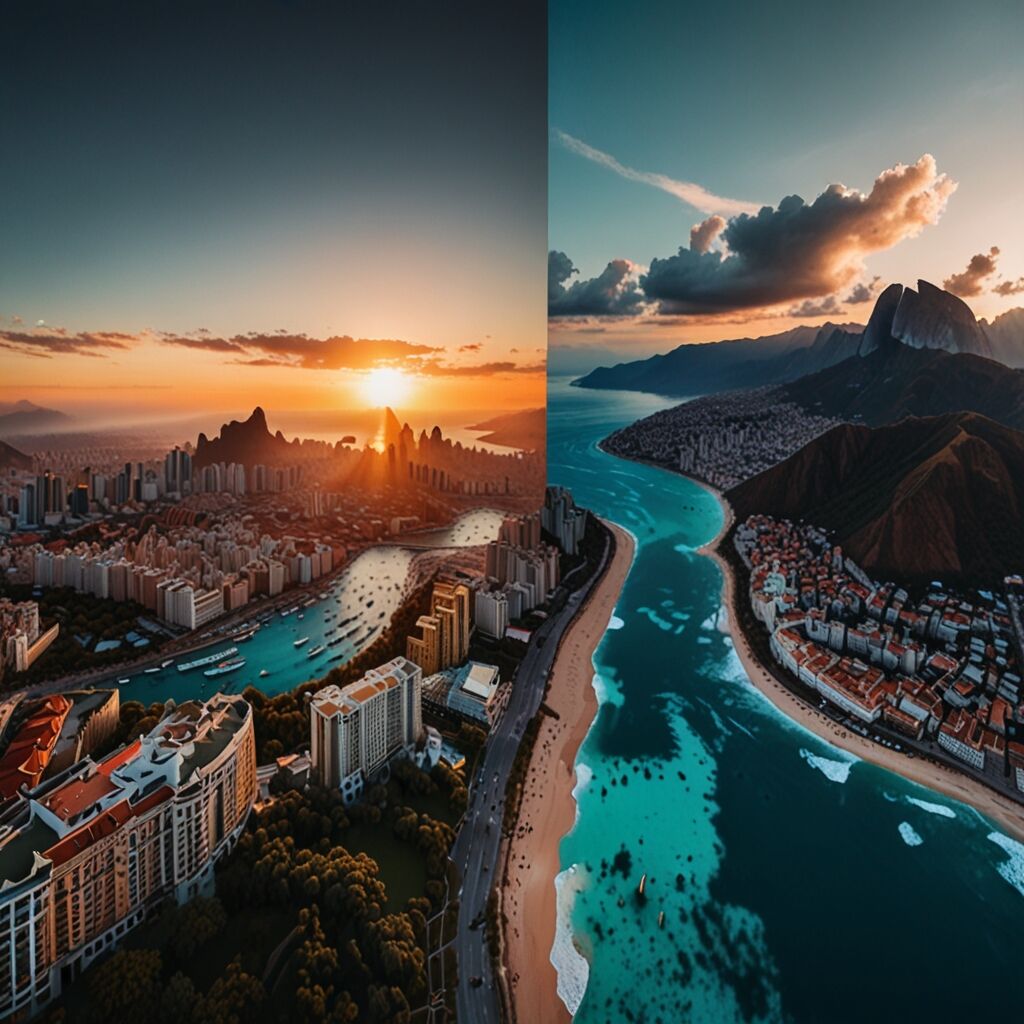
Exploring cultural patterns in urban settings reveals how cultural influences shape the city’s daily life, with examples like the intricate tile designs in Lisbon or graffiti art in Berlin reflecting local traditions. Traditional patterns can enhance modern urban photography, as seen in cities like Paris, where historic architecture meets modern street style, resulting in rich, dynamic photographs. Identifying cultural elements in photography involves looking for unique motifs, such as the mosaic art in Barcelona or the vibrant marketplaces of Marrakech, to convey the essence of a place. History plays a significant role in urban patterns; for example, ancient Roman road layouts still influence cities like London and Rome, blending past and present into a seamless cultural urban landscape.
How Do Historic Sites Influence Urban Photographic Patterns?
Unique historic sites offer distinct photographic patterns, with landmarks like the Colosseum in Rome or the Great Wall of China providing unparalleled visual interest with their texture and form. Many historic landmarks, such as the Eiffel Tower in Paris or Big Ben in London, contribute to a city’s urban patterns by defining its skyline and iconic views. Historical architecture impacts urban texture photography by providing timeworn surfaces that contrast with contemporary structures, as seen in ancient temples juxtaposed with modern skyscrapers in Tokyo. Specific historic styles, such as Gothic in Prague or Art Deco in Miami, influence current city patterns by inspiring new designs that keep the architectural spirit alive.