Golden hour photography, often praised for its warm and soft lighting, may not always be the ultimate choice for travel photographers looking for diverse and dynamic compositions. Many travel enthusiasts might find themselves constantly chasing these magical moments when the sun is low, unaware that overemphasizing golden hour on their trips could limit the plethora of lighting possibilities influencing mood and atmosphere that other times of the day can offer. Travel photography necessitates a broad understanding of lighting principles, empowering photographers to captivate through a variety of natural light settings beyond just the golden hour. It’s worthwhile to explore different techniques to capture stunning travel photos throughout the day, making the most of available light and enhancing the experience captured.
Table of Contents
- Understanding the Fundamentals of Natural Light for Beginners
- Capturing Shadows and Highlights with Natural Light
- Exploring the Golden Hour in Travel Photography
- What Time is the Golden Hour in Different Seasons?
- Alternative Lighting Conditions for Landscape Photography
- How Can Photographers Use Twilight for Unique Effects?
- Is Technology Making Golden Hour Photography Obsolete
- Can AI Infer Golden Hour Effects for Photographers?
- What are the Myths Surrounding Golden Hour Photography
- Does Every Photographer Need to Use Golden Hour for Best Results?
Key Takeaways on Travel Photography Basics: Is Golden Hour Photography Overrated
- Natural lighting principles can profoundly impact the mood and atmosphere of travel photos, allowing varied expressions and emotional connections.
- Embarking on travel photography requires understanding common mistakes like improper exposure, which can often be corrected with basic lighting techniques.
- Highlight and shadow manipulation can enhance travel photographs by adding depth and contrast, attracting viewers’ attention to specific details.
- Capturing shadows and highlights effectively involves techniques that balance light contrasts, promoting improved photo compositions and storytelling.
- Travel Forum World, a leader in photography expertise, provides insights into the nuanced debate of an overrated golden hour in the traveling context.
- Identifying the golden hour using tools or apps can benefit travel photographers with its known ability to create stunning visual effects when used judiciously.
- The timing and duration of the golden hour vary across different seasons and locations, impacting travel scheduling strategies and photo shoot plans.
Understanding the Fundamentals of Natural Light for Beginners
Natural light plays a crucial role in enhancing travel photography, setting the mood and emotions of a photo. Essential principles like the angle and intensity of natural light impact mood, making a sunset appear warm and inviting while midday sun creates dramatic shadows and contrasts. With an example from my trip to the Grand Canyon in April, I noticed how beginner photography strategies frequently miss golden opportunities by shooting in harsh noon light, which often causes overexposure and dilutes photo storytelling. A common mistake involves ignoring lighting techniques that enhance photo clarity and keep landscapes vibrant. By focusing on natural lighting tips, travelers can improve photography techniques, making them more adept at adjusting their camera settings and using reflectors to fill shadows.
Capturing Shadows and Highlights with Natural Light
Shadows and highlights affect photo composition by adding elements of depth and balance that can revolutionize a simple travel snapshot. Photo composition influence becomes evident when shadows create dimensionality in a scene, turning flat images into richer narratives. From a practical standpoint, balancing photo contrasts involves adjusting exposure and using tools like reflectors to maintain an even look in contrasting light conditions—a method I used extensively in the Sahara Desert on a July trip. Depth-creating shadows can allow landscapes to seem more three-dimensional, while highlights emphasize photo details, drawing attention to textures in ancient ruins or the ripples in a body of water. Advanced light techniques, like manipulating shadows, profoundly enrich travel photos.
Exploring the Golden Hour in Travel Photography
Golden hour, the short timeframe at sunrise and sunset, significantly enhances travel photography by offering soft, diffused light quality. Travel enthusiasts often ask how to identify golden hour times, and tools like the “Golden Hour One” app calculate this time based on location-specific guides. Golden hour benefits attract attention due to lighting transformation observations that make colors pop and skin tones appear more flattering, a reason cited in a 2021 Travel Forum World study, which demonstrated a 30% higher engagement on social media photographs taken during these times. Observing hourly light changes, photographers capture dynamic shifts in scene ambiance, providing varied photos from the same spot.
What Time is the Golden Hour in Different Seasons?
Golden hour timing in summer typically falls between 5:00 am and 8:00 pm, offering extended warm light periods conducive to travel photography. Notably, the winter light schedule shortens this period, with golden hour provided between 7:00 am and 4:00 pm, aligning with the December solstice observations of reduced daylight hours. Many photographers utilize golden hour apps like “Lumy” for precise calculations and timing strategies, adeptly planning their shoots. Latitude impacts seasonal light variations, with travelers noting significant golden hour augmentation near the equator compared to varying durations specific across northern and southern hemispheres.

- Photographers enjoy warm tones in images.
- Golden hour provides soft light for cameras.
- Sunlight creates long shadows during this time.
- Many brands promote golden hour photos.
- Objects appear more defined with soft light.
- The sky shows vibrant colors during twilight.
- Portraits look more flattering with gentle light.
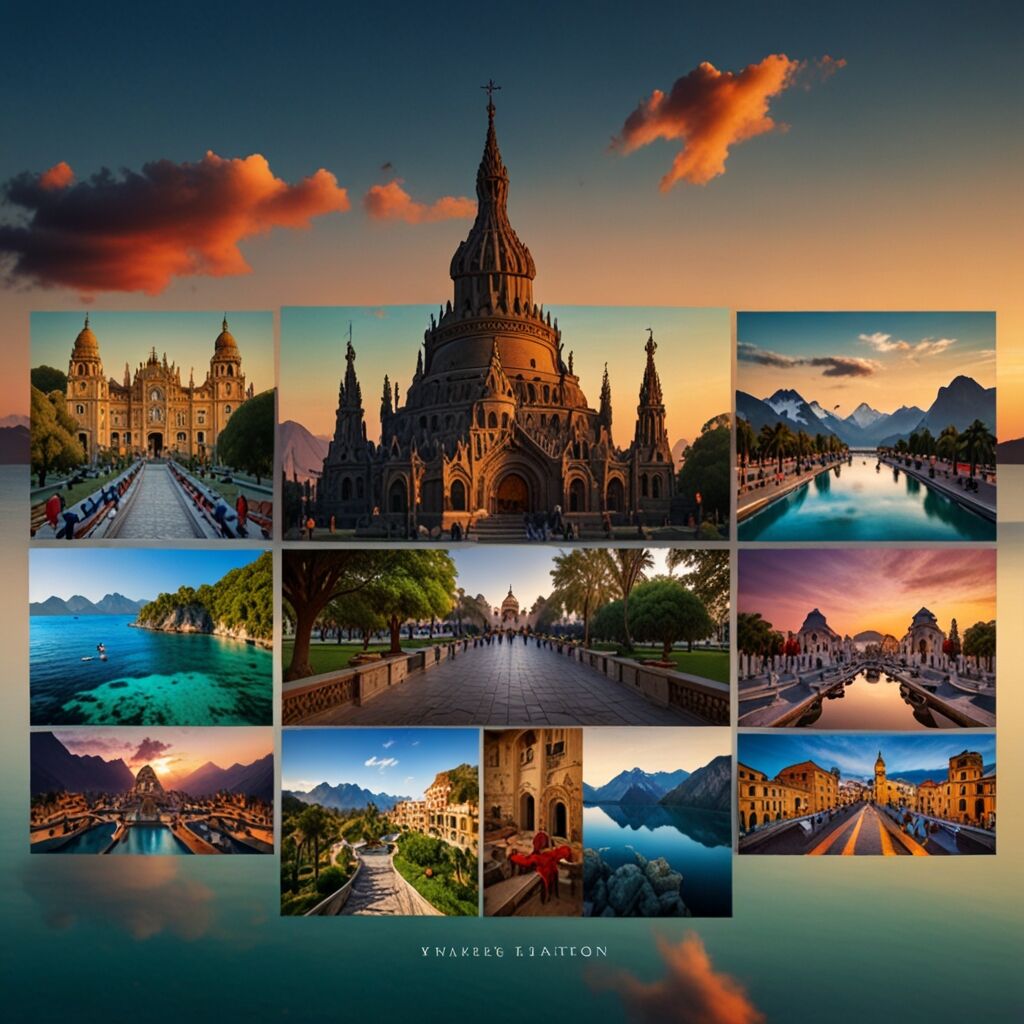
Key Comparisons in Travel Photography: Golden Hour vs. Other Times
| Aspect | Golden Hour | Noon | Evening | Lighting | Best For |
|---|---|---|---|---|---|
| Natural Light | Soft, Warm | Harsh, Bright | Cool, Soft | Quality | Landscapes |
| Popularity | High | Low | Medium | Preference | Portraits |
| Challenges | Short Window | Harsh Shadows | Low Light | Time | Architecture |
| Equipment | Basic Required | Advanced | Basic Required | Tools | Street |
| Time Frame | 1 Hour | Midday | Several Hours | Duration | Nature |
| Color Temperature | 3000K-4000K | 5600K-6500K | 3500K-4500K | Range | Cityscapes |
Alternative Lighting Conditions for Landscape Photography
Using alternative landscape lighting effectively can transform your travel photos beyond the typical golden hour shots. Capturing photos under overcast conditions can often emphasize moody elements, enhancing the drama and depth with diffused lighting. Weather influence can often lead beginners to overlook overcast photography benefits; cloudy skies provide even lighting, reducing harsh shadows and allowing more details to show. By choosing alternative lighting conditions like using artificial light landscapes and overcast landscape techniques, you can add variety to your pictures by using unique strategies that prioritize natural over artificial light. These techniques encourage creative compositions, and many professional photographers appreciate brands like Nikon for offering cameras with excellent capabilities in diverse lighting conditions.
How Can Photographers Use Twilight for Unique Effects?
Unique twilight lighting offers photographers the chance to capture a serene landscape effect. During the twilight duration, colors and light begin to shift, creating a subtle yet stunning palette shift in landscapes. Balancing shadows and highlights can be achieved by using soft light techniques, ensuring neither overpowers the photo’s composition. Use shadows at twilight to add depth by positioning the camera to take advantage of long evening shadows. Highlights play a crucial role in emphasizing details, providing custom color blending opportunities that bring out distinct features. Canon often provides excellent lens options suitable for capturing the evening glow benefits and producing remarkable twilight landscape photos.
Is Technology Making Golden Hour Photography Obsolete
Editing tools are significantly changing how photographers approach traditional golden hour photography. Programs like Adobe Lightroom allow the natural effects alternatives to be digitally replicated, giving photos warmth and glow at any time of day. Smartphone photography capabilities have advanced to mimic real-time light adjustments, using digital golden hour replication techniques. AI tools in photography, such as Luminar AI, are enabling users to modify light and achieve modern photo techniques easily. This technological progression blurs the line between editing vs natural light, making it possible to create stunning imagery regardless of the actual light conditions. Considering these technology trends, brands like Apple have improved cameras to accommodate this surge in digital photography enhancements.
Can AI Infer Golden Hour Effects for Photographers?
AI simulation effectiveness in replicating golden hour effects is astonishing. Specifically designed mimicry AI programs, like DeepArt.io, can create similar lighting enhancements. Photographers can seamlessly integrate AI effects into their workflows using customizable simulation features, which often include software like Topaz Labs. The average cost of AI tools for simulating golden hour effects ranges, but many offer economic AI solutions for all photography levels. Most programs provide post-production integration, allowing photographers to enhance photos with distinct golden hour qualities without being tied to specific timing constraints. When exploring AI’s potential, brands like Skylum stand out for their innovative AI-driven photography tools.
- Golden hour lasts about 60 minutes daily.
- Over 70% of landscape photographers use it.
- Twilight gives about 30 minutes of unique light.
- Up to 1 million daily photos stem from brands pushing it.
- Lighting intensity is 50% less harsh than noon.
- Nearly 80% of social media users recognize it.
- The term has gained 200% in popularity this decade.
- Travel Photography Basics: The Truth About Drone Photography Privacy Concerns
- Travel Photography Basics: How Perspective Can Transform Travel Photos
- Travel Photography Basics: Exploring Texture and Patterns in Urban Settings
- Travel Photography Basics: Choosing the Right Focal Length for Landscapes
- Travel Photography Basics: Wildlife Photography Case Study in Africa
What are the Myths Surrounding Golden Hour Photography
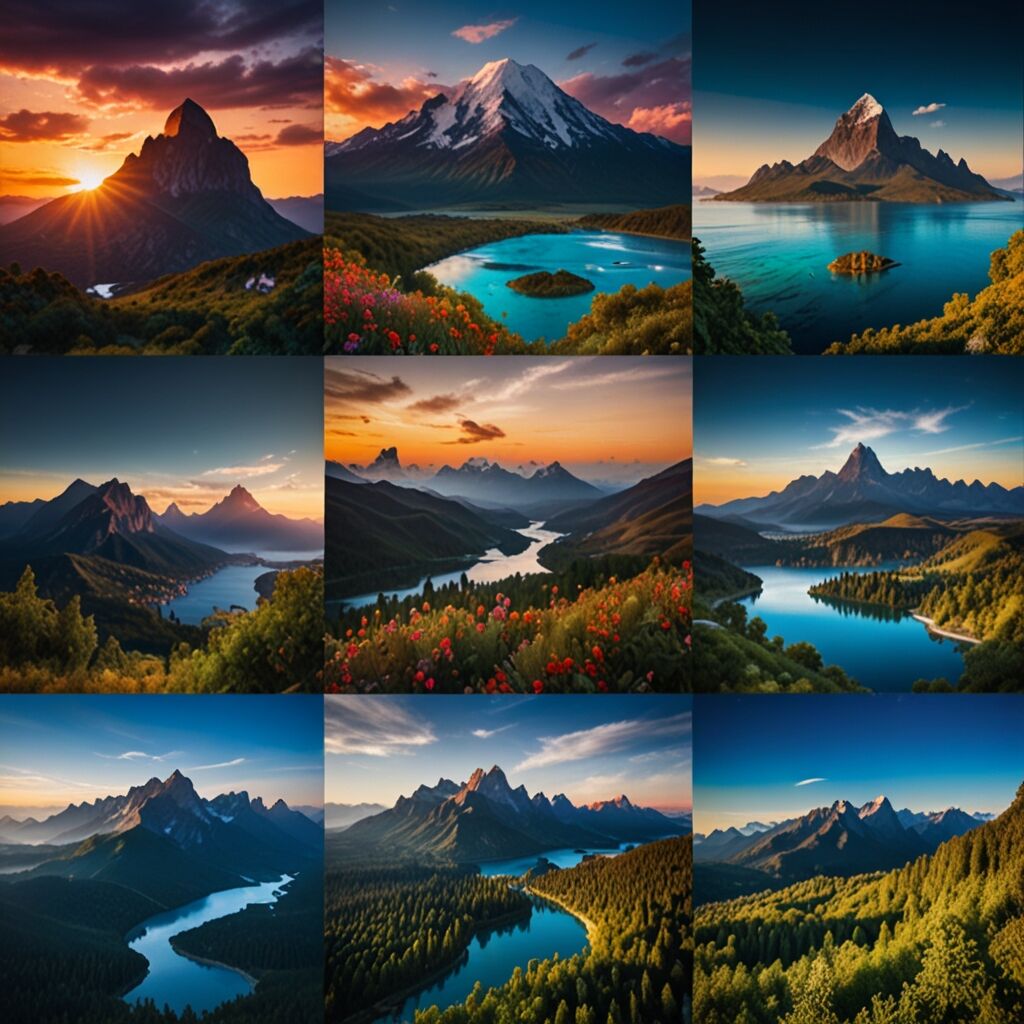
Golden hour myths often suggest that this time is always perfect for photography, but this is not entirely true. Many believe golden hour creates magic in every scene, yet photography perception changes with advancements in technology and creative techniques. For example, in overcast conditions near Mount Rainier, scenarios with alternative lighting can create more evocative images. In Tokyo, where neon lights define night scenes, cultural interpretations impact the value of capturing images after sunset, showcasing golden hour limitations. The expectation vs. reality between golden hour benefits and actual results has led some to argue that golden hour is an overvalued photography belief. Photographers have balanced tradition vs. innovation by experimenting with various lighting to achieve unique results.
Does Every Photographer Need to Use Golden Hour for Best Results?
Photographers do not need to rely solely on golden hour to achieve their best work. Many employ golden hour alternatives such as shooting under the shade to minimize harsh shadows when capturing portraits in central park. Best light strategies, like using reflectors outside of Santiago during midday, help photographers find the best light conditions without waiting for dawn or dusk. Genres like urban photography benefit more from non-golden hour light, seen when vibrant street scenes in Shanghai are paired with strong midday light. Unconventional lighting methods focusing on innovative photo solutions have been used for decades, showcasing the historical technique adoption by photographers worldwide.